Crowded teeth are a dental condition many people experience. It can affect children as their permanent teeth grow in, or adults as teeth slowly shift over time. When there isn’t enough space in the jaw, teeth may overlap, twist, or move out of their natural position.
Although crowding is often noticed because it changes the appearance of a smile, the concern goes beyond looks. If not addressed, crowded teeth can make daily oral care difficult and increase the risk of long-term dental problems. In this article, we’ll look at what crowded teeth are, why they happen, the oral health issues they may cause, and the treatment methods commonly used.
Table of Contents
What Are Crowded Teeth?
Crowded teeth occur when teeth do not have enough room to align properly within the jaw. Instead of sitting neatly in a straight line, teeth may overlap, rotate, or appear tightly packed together.
Crowding can vary from person to person:
- Mild crowding – may involve small overlaps or slight rotations
- Moderate crowding – is more noticeable and can affect cleaning
- Severe crowding – may cause teeth to shift significantly or remain partially blocked
In some cases, crowding begins during childhood, while in others it develops gradually in adulthood due to natural tooth movement or jaw changes.
Common Causes of Crowded Teeth
There is no single reason why teeth become crowded. In most cases, it results from a combination of factors.
Genetics
Jaw size and tooth size are often inherited. If someone has a smaller jaw or larger teeth, there may not be enough space for proper alignment.
Jaw and Tooth Size Imbalance
When teeth are too large for the jaw, they compete for space. This imbalance commonly leads to overlapping or crooked teeth.
Early or Delayed Loss of Baby Teeth
Baby teeth guide permanent teeth into position. Losing them too early or too late can disrupt this process and result in crowding.
Wisdom Teeth Influence
In adults, erupting wisdom teeth may push surrounding teeth forward, contributing to crowding over time.
Childhood Habits
Habits such as thumb sucking, prolonged pacifier use, or tongue thrusting can influence jaw growth and tooth positioning, especially during early development.
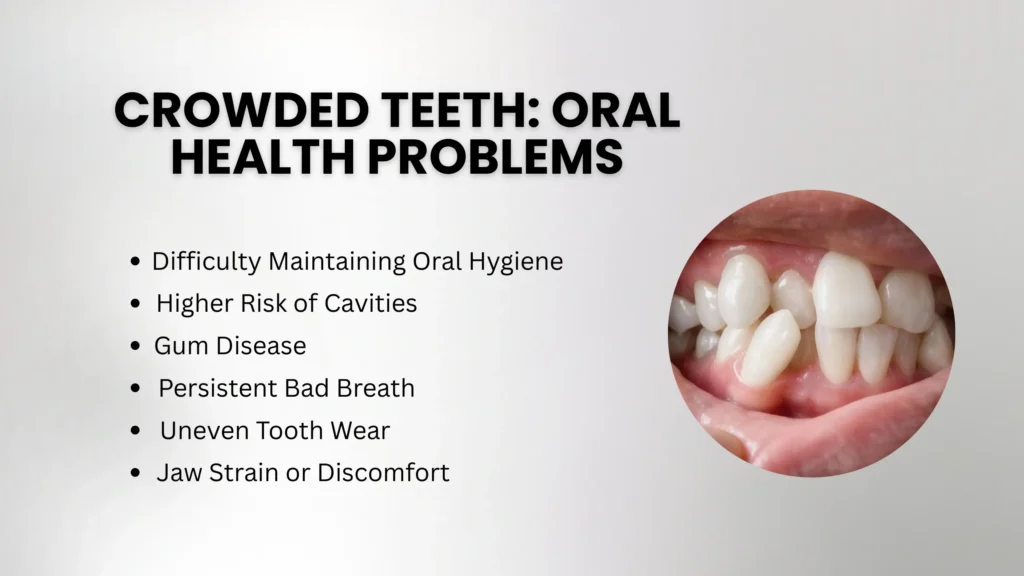
Oral Health Problems Caused by Crowded Teeth
Crowded teeth are not just an aesthetic issue. They can directly affect oral health if proper care becomes difficult.
Difficulty Maintaining Oral Hygiene
When teeth overlap, brushing and flossing become less effective, allowing plaque to build up in hard-to-reach areas.
Higher Risk of Cavities
Food particles and bacteria can easily get trapped between crowded teeth, increasing the chance of tooth decay.
Gum Disease
Plaque accumulation around crowded teeth can irritate the gums, leading to inflammation, bleeding, and eventually periodontal disease.
Persistent Bad Breath
Bacteria trapped between misaligned teeth may cause ongoing bad breath despite regular brushing.
Uneven Tooth Wear
Teeth that are out of alignment may wear down unevenly, which can weaken enamel and cause sensitivity over time.
Jaw Strain or Discomfort
In some individuals, crowding can affect the bite and place extra strain on the jaw muscles, leading to discomfort.
Treatment Methods for Crowded Teeth
Treatment depends on factors such as the severity of crowding, age, and overall dental health. A dental professional will recommend the most suitable option after evaluation.
Orthodontic Treatment
Orthodontic treatments may gradually move teeth into better alignment and are commonly used for various levels of crowding.
Braces
Traditional braces can be effective in correcting moderate to severe crowding, especially in complex cases.
Clear Aligners
Clear aligners use a series of removable trays to gently guide teeth into position. They are often chosen for mild to moderate crowding.
Tooth Reshaping or Extraction
In severe cases, space may need to be created by reshaping teeth or removing one or more teeth before alignment treatment.
Early Intervention for Children
Monitoring dental development during childhood can help identify crowding early. Addressing issues at the right time may reduce the need for more complex treatment later.
When Should Crowded Teeth Be Treated?
Treatment is usually recommended when crowded teeth:
- Make brushing and flossing difficult
- Lead to frequent cavities or gum problems
- Affect bite function
- Cause discomfort or uneven tooth wear
Early evaluation often allows for simpler and more effective treatment options.
Frequently Asked Questions
1. Can crowded teeth become worse over time?
Answer. Yes, teeth can continue to shift as we age, and crowding may gradually increase if left untreated.
2. Is treatment necessary for mild crowding?
Answer. Treatment is not always required for mild crowding. In many cases, it may only require monitoring, but regular dental check-ups are important to prevent future issues.
3. How long does treatment usually take?
Answer. Treatment duration can vary depending on the severity of crowding and the method used. It can range from several months to a few years.
Final Thoughts
Teeth crowding is just one of many alignment issues that can affect oral health over time. Understanding the condition is the first step, but choosing the right guidance matters just as much.
If you’d like to explore clear aligner treatment options in Kerala and learn how teeth alignment problems are commonly managed, visit our Clear Aligner in Kerala homepage to get a complete overview.
To learn more about different types of teeth alignment problems, visit our teeth misalignment issues guide, where we explain common conditions and their treatment approaches.
You may also find these related reads helpful:
Early awareness and the right information can make a significant difference in maintaining long term oral health.