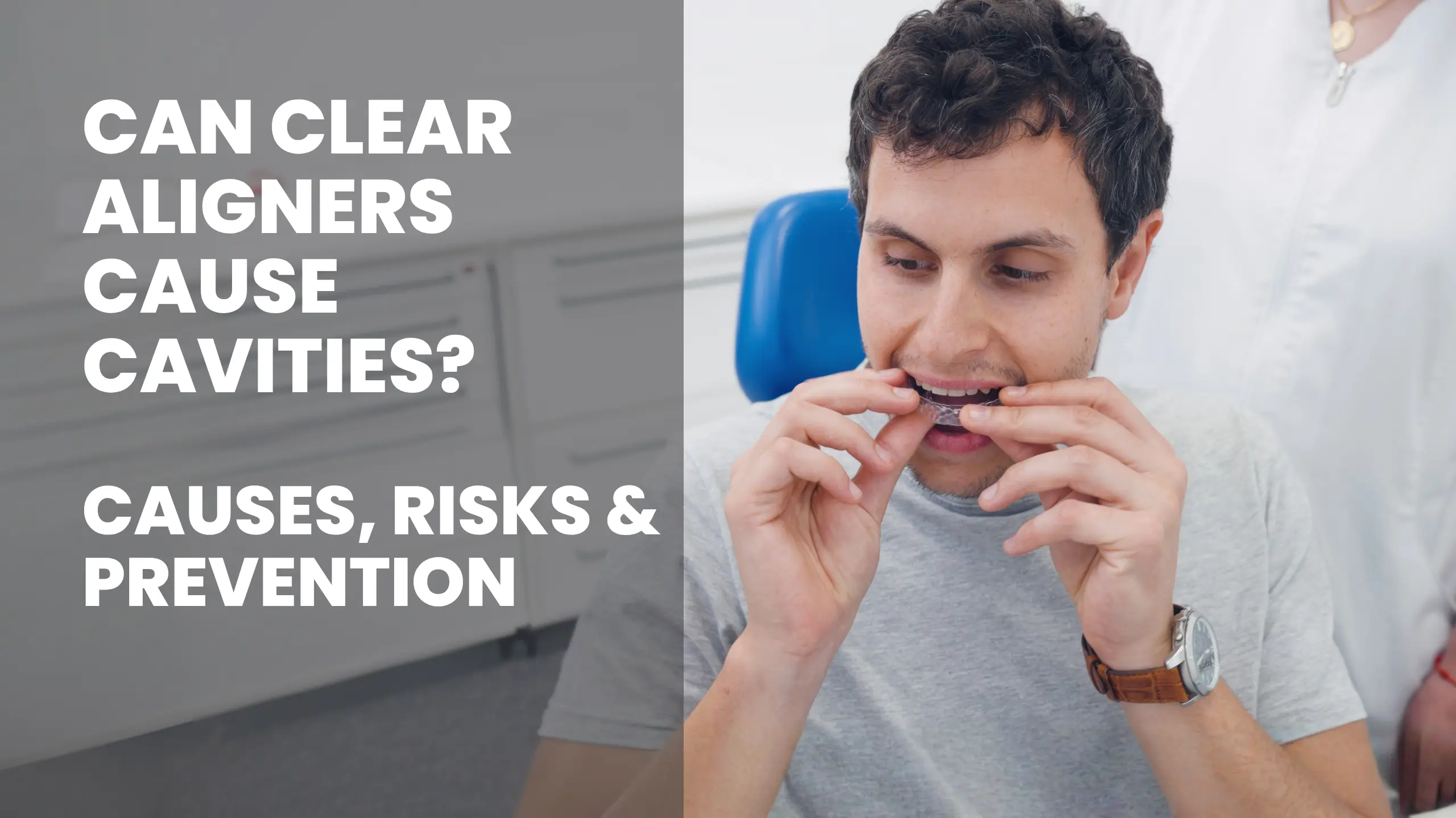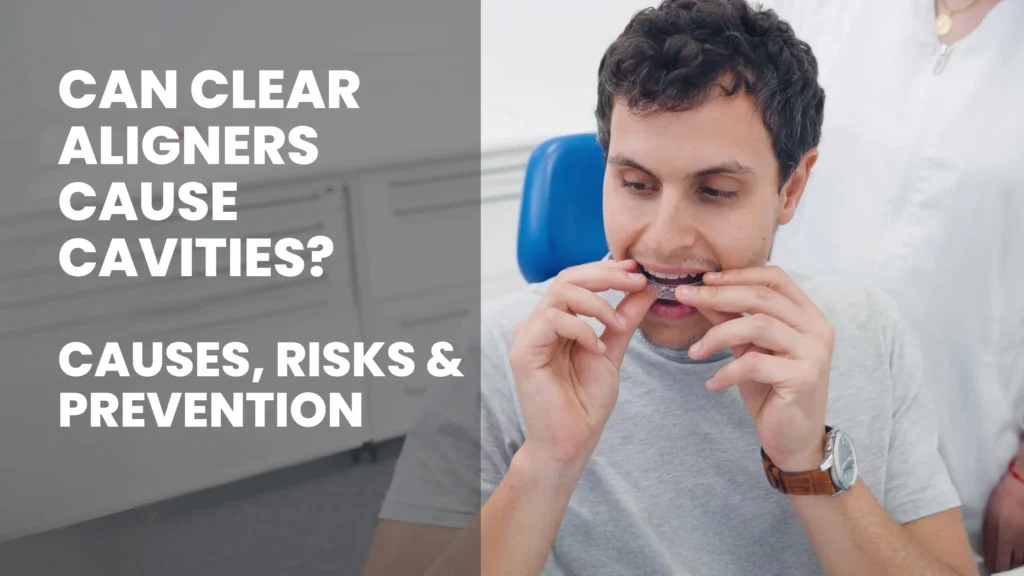
Clear aligners are a popular and effective way to straighten teeth without the discomfort of traditional braces. They are removable, easy to use, and nearly invisible.
However, many users have a common concern:
Can clear aligners cause cavities?
The short answer is, aligners themselves do not cause cavities, but certain habits during treatment can increase the risk.
Since aligners cover your teeth for most of the day, poor oral hygiene, trapped food particles, and improper cleaning can create the perfect environment for bacteria to grow.
In this guide, you’ll learn:
- What actually causes cavities during aligner treatment
- The risks you should be aware of
- Simple ways to prevent cavities effectively
Table Of Contents
Do Clear Aligners Increase the Risk of Cavities?
Clear aligners themselves are safe and do not damage your teeth.
However, they can create conditions where cavities are more likely if proper care is not taken.
Unlike normal situations, aligners keep your teeth covered for long hours. If your teeth are not clean before wearing them, this can allow bacteria to stay in contact with your teeth for extended periods.
This is why aligner users need to be more careful about oral hygiene compared to regular conditions.
Common Causes of Cavities While Using Clear Aligners
Cavities during aligner treatment are usually caused by everyday habits. Understanding these causes can help you avoid problems and maintain good oral health.
1. Wearing Aligners Without Brushing After Meals
One of the most common causes is wearing aligners immediately after eating.
Why this is a problem:
- Food particles remain on teeth
- Bacteria feed on these particles
- This leads to plaque buildup
Over time, this increases the risk of cavities.
2. Frequent Consumption of Sugary Foods and Drinks
Sugary foods and drinks are a major cause of cavities.
When combined with aligners:
- Sugar stays in contact with teeth for longer
- Bacteria produce acid
- Enamel starts to weaken
This makes cavity formation more likely.
3. Drinking Beverages While Wearing Aligners
Many users drink tea, coffee, or soft drinks without removing aligners.
This can:
- Trap sugar and acids inside
- Increase bacterial activity
- Cause staining and decay
Always remove aligners before drinking anything other than water.
4. Poor Oral Hygiene Routine
Skipping brushing or flossing can quickly lead to dental issues.
This includes:
- Not brushing twice daily
- Not flossing regularly
- Not cleaning aligners properly
Poor hygiene allows plaque to build up, increasing cavity risk.
5. Wearing Aligners for Long Hours Without Cleaning
Aligners are worn for long durations, which makes cleaning even more important.
If not cleaned properly:
- Bacteria can accumulate on aligners
- These bacteria transfer back to teeth
Clean your aligners daily to prevent this.
6. Dry Mouth or Reduced Saliva
Saliva plays an important role in protecting your teeth.
Reduced saliva can:
- Increase bacterial growth
- Reduce natural cleaning of teeth
This can increase the chances of cavities during treatment.
Risks of Cavities During Clear Aligner Treatment
Cavities during aligner treatment are not just a minor issue. If ignored, they can affect both your oral health and treatment progress.
1. Tooth Decay and Damage
Cavities begin as small areas of decay but can worsen over time.
If not treated early:
- Enamel gets damaged
- Decay can reach deeper layers of the tooth
- You may need fillings or more advanced treatment
2. Increased Tooth Sensitivity
Cavities can make your teeth more sensitive to:
- Hot or cold foods
- Sweet items
- Pressure from aligners
This can make wearing aligners uncomfortable.
3. Delay in Aligner Treatment
If cavities develop during treatment:
- You may need to pause aligner use
- Dental treatment must be completed first
This can delay your overall treatment timeline.
4. Poor Treatment Results
Healthy teeth and gums are essential for proper tooth movement.
Cavities can:
- Affect tooth stability
- Interfere with aligner effectiveness
This may impact your final results.
5. Risk of Infection
Untreated cavities can lead to serious issues like infection.
In severe cases:
- Pain and swelling may occur
- Root canal treatment may be required
How to Prevent Cavities While Using Clear Aligners
Preventing cavities during aligner treatment is simple, it comes down to maintaining proper oral hygiene and following the right habits consistently.
1. Brush After Every Meal
2. Floss Daily
3. Rinse Your Mouth Frequently
4. Use the Right Toothpaste
5. Clean Your Aligners Regularly
6. Avoid Sugary and Acidic Foods
7. Remove Aligners Before Drinking Anything Except Water
8. Maintain Consistent Oral Hygiene Routine
Final Verdict
Clear aligners do not directly cause cavities, but they can increase the risk if proper oral hygiene is not maintained.
The key point to remember:
Aligners are safe, your habits make the difference.
By following a good oral care routine, you can:
- Prevent cavities
- Maintain healthy teeth and gums
- Ensure smooth and effective aligner treatment
If you’re considering clear aligner treatment, explore our complete guide to clear aligners to understand how it works and what to expect.
Frequently Asked Questions
1. Can clear aligners cause cavities?
Answer: No, aligners do not directly cause cavities. However, poor oral hygiene during treatment can increase the risk.
2. How can I prevent cavities while using aligners?
Answer: Brush after every meal, floss daily, clean your aligners properly, and avoid sugary foods.
3. Is it safe to wear aligners without brushing?
Answer: No, wearing aligners without brushing can trap food and bacteria, increasing the risk of cavities.
4. Can I drink with aligners on?
Answer: Only water is safe. Other drinks can trap sugar and acids against your teeth. If you want to learn more about food habits during clear aligner treatment, read our detailed guide, Do’s and Don’ts of food habits with aligners
5. What happens if I get a cavity during treatment?
Answer: You may need dental treatment before continuing with your aligners, which can delay your progress.