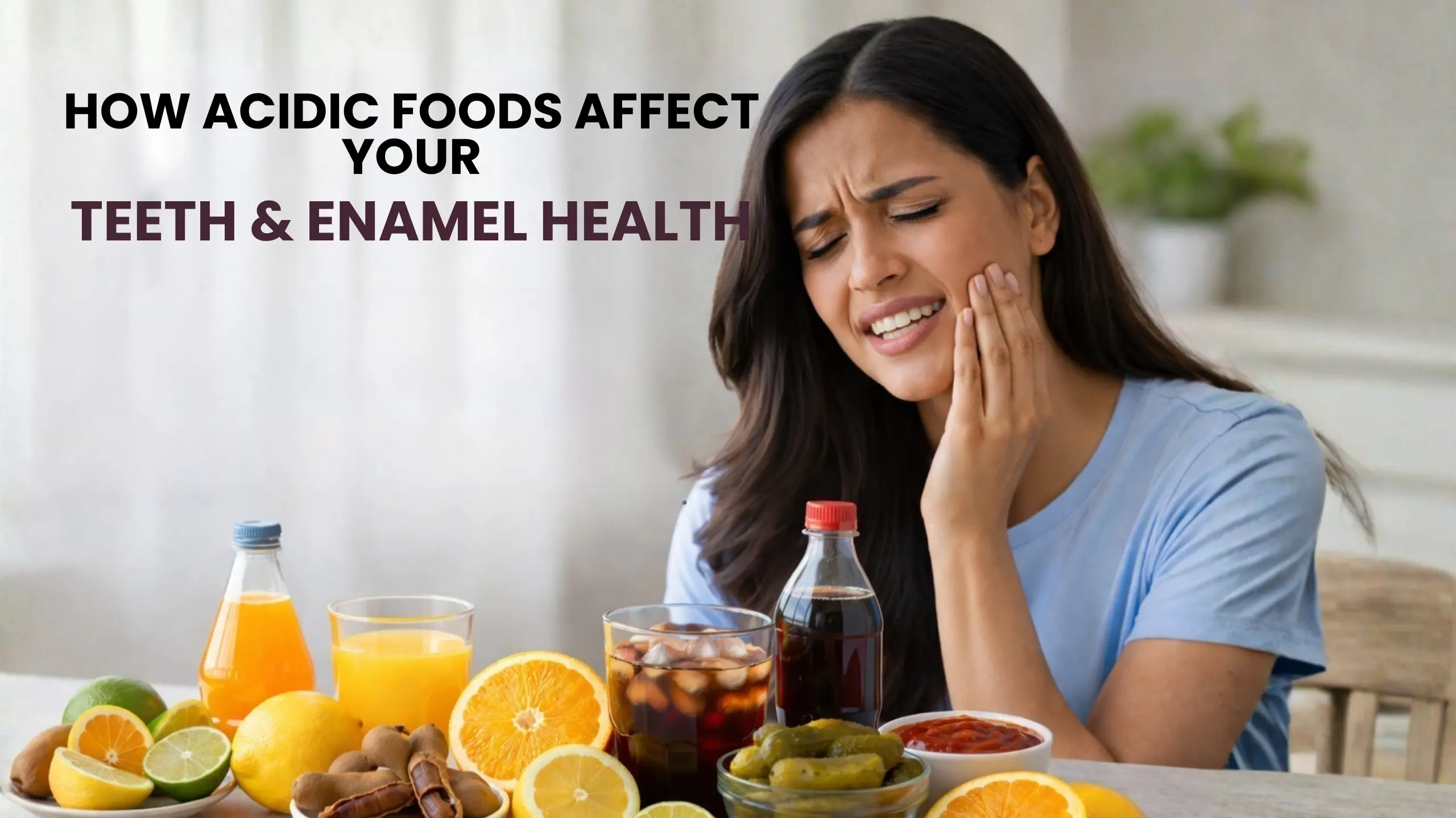
Most people associate tooth damage with sugar. However, acidity is another major factor that can silently weaken your teeth over time. Many everyday foods and drinks contain acids that gradually wear down enamel, even if they don’t taste extremely sour.
Understanding how acidic foods affect teeth is important for maintaining long term oral health. As enamel gradually thins, teeth may become sensitive, appear darker, and face a higher chance of developing cavities. The good news is that simple daily habits can significantly reduce the damage.
Table Of Content
Understanding Tooth Enamel and Its Role
Tooth enamel is the hard, outer layer that protects your teeth from daily wear and tear. It shields the inner layers of the tooth from bacteria, temperature changes, and physical damage.
Although enamel is the strongest substance in the human body, it is not indestructible. Once it becomes thin or damaged, the inner layer of the tooth is more exposed, which may lead to sensitivity and other dental concerns. That is why protecting enamel is essential for preventing long term dental problems.
What Are Acidic Foods?
When a food or drink has a low pH, it means it contains higher acidity. When you consume acidic foods or drinks frequently, the acid temporarily softens the enamel surface. Repeated exposure weakens this protective layer and leads to dental erosion.
Common Acidic Foods and Drinks
Many items in a regular diet can contribute to enamel erosion:
- Citrus fruits like oranges, lemons, and limes
- Tamarind based dishes
- Pickles and vinegar based foods
- Carbonated soft drinks
- Packaged fruit juices
- Sports and energy drinks
- Tomato based sauces
These foods are not harmful when consumed in moderation. The problem arises when they are consumed frequently throughout the day without proper oral care.
How Acidic Foods Damage Tooth Enamel
Every time you consume something acidic, your teeth are exposed to a temporary drop in pH levels inside the mouth. During this time:
- The acid softens the enamel surface.
- Minerals such as calcium are lost from the enamel.
- Repeated exposure prevents proper remineralization.
Over time, this leads to enamel erosion. Unlike cavities, which are caused by bacteria, enamel erosion is directly related to chemical wear from acid exposure.
When enamel becomes thinner, the inner yellow layer of the tooth (dentin) becomes more visible, making teeth appear darker.
Early Signs of Enamel Erosion
Many people do not notice enamel damage until it becomes significant. Recognizing the early signs can help prevent further tooth surface damage.
Watch for:
- Tooth sensitivity to hot or cold foods
- Increased sensitivity to sweets
- Yellowing of teeth
- Transparent edges on front teeth
- Rough or uneven tooth surfaces
- Small cracks or chips
If you experience these symptoms, it may indicate enamel weakening due to acidic exposure.
Who Is at Higher Risk?
Some individuals are more prone to dental erosion than others.
Higher-risk groups include:
- People who consume soft drinks or fruit juices daily
- Those who snack frequently
- Children and teenagers with high intake of packaged beverages
- Individuals with dry mouth
- People with acid reflux
Orthodontic patients should also be careful. When wearing braces or aligners, maintaining enamel health becomes even more important because plaque buildup combined with acid exposure can increase the risk of cavities.
How to Protect Your Teeth from Acidic Damage
Preventing enamel erosion does not mean eliminating all acidic foods. Instead, it involves smarter habits and better oral hygiene practices.
1. Rinse with Water After Eating
Rinsing your mouth with plain water helps neutralize acid and wash away food particles.
2. Avoid Brushing Immediately
Brushing right after consuming acidic foods can worsen enamel wear because the surface is temporarily softened. Wait at least 30 minutes before brushing.
3. Use Fluoride Toothpaste
Fluoride strengthens enamel and supports remineralization. Regular use helps protect against acid related damage.
4. Limit Frequent Snacking
Constant snacking increases the number of acid attacks on your teeth. Try to consume acidic foods during main meals rather than throughout the day.
5. Drink Acidic Beverages Through a Straw
Using a straw reduces direct contact between the acid and your teeth.
6. Schedule Regular Dental Checkups
Routine dental visits allow early detection of enamel erosion and professional guidance for prevention.
Can Enamel Grow Back?
Unlike other tissues in the body, enamel does not regenerate once it is significantly worn away. However, early enamel damage can be managed through remineralization.
Saliva naturally helps restore lost minerals, and fluoride products support this process. That is why early detection and preventive care are critical.
Severe enamel erosion may require restorative dental procedures, which is why prevention is always better than treatment.
Why Awareness Matters
Modern diets often include acidic beverages and processed foods. Many people are unaware that even healthy options like citrus fruits can contribute to enamel erosion when consumed excessively.
Understanding the relationship between acidic foods and teeth helps you make informed dietary choices without compromising your oral health.
Small changes such as rinsing after meals, reducing soda intake, and maintaining consistent oral hygiene can protect your enamel for years to come.
Final Thoughts
Acidic foods are a regular part of everyday diets, but repeated exposure can gradually weaken tooth enamel. Over time, this may lead to tooth sensitivity, discoloration, and a higher risk of dental problems.
By recognizing early signs of enamel erosion and adopting preventive habits, you can protect your teeth effectively. Maintaining enamel health is an important part of overall oral care and contributes to a strong, confident smile at any age.
Frequently Asked Questions
1. Do acidic foods permanently damage teeth?
Answer: Acidic foods can weaken tooth enamel over time if consumed frequently. Mild enamel softening can be managed with proper oral care and fluoride use. However, severe enamel erosion cannot be reversed naturally, which is why prevention is important.
2. How long should I wait to brush after eating acidic foods?
Answer: It is recommended to wait at least 30 minutes before brushing. Acid temporarily softens enamel, and brushing immediately can increase surface wear. Rinsing with water right after eating is a safer option.
3. Are citrus fruits bad for teeth?
Answer: Citrus fruits contain natural acids that can affect enamel if consumed excessively. They are not harmful when eaten in moderation as part of a balanced diet. The key is to avoid frequent exposure and maintain good oral hygiene.
4. What are the early signs of enamel erosion?
Answer: Common early signs include:
- Tooth sensitivity to hot or cold
- Yellowing of teeth
- Smooth or shiny tooth surfaces
- Transparent edges on front teeth
If these symptoms appear, a dental checkup is advisable.
5. Can children experience enamel erosion?
Answer: Yes, children and teenagers can develop enamel erosion, especially if they regularly consume soft drinks, packaged juices, or acidic snacks. Early awareness and preventive habits help protect developing teeth.
6. How can I strengthen my tooth enamel naturally?
Answer: While enamel cannot regrow, you can support remineralization by:
- Using fluoride toothpaste
- Reducing acidic food intake
- Drinking enough water
- Maintaining regular dental checkups