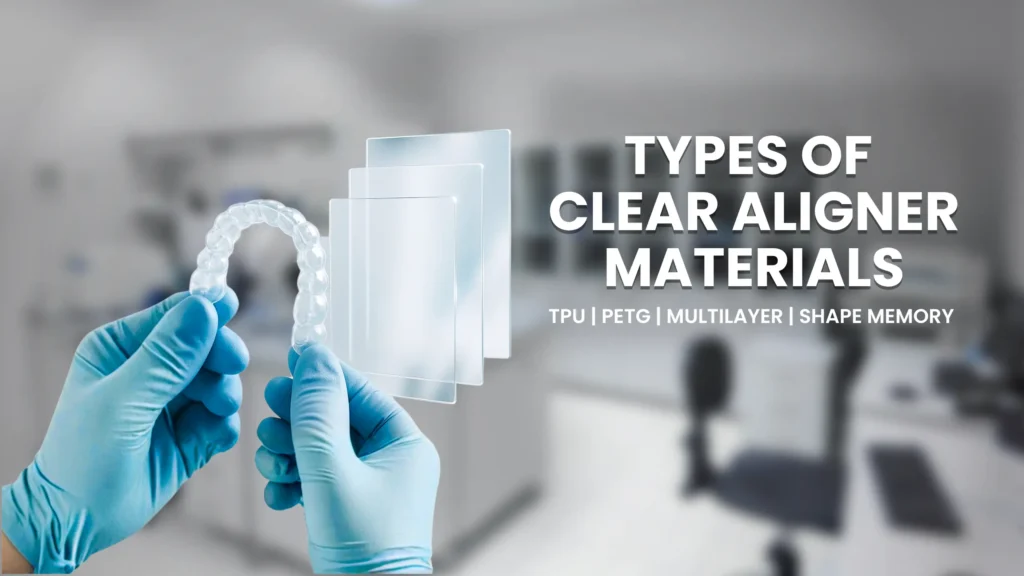
All clear aligners may look the same – transparent trays that fit snugly over your teeth, but what they’re made of makes a huge difference.
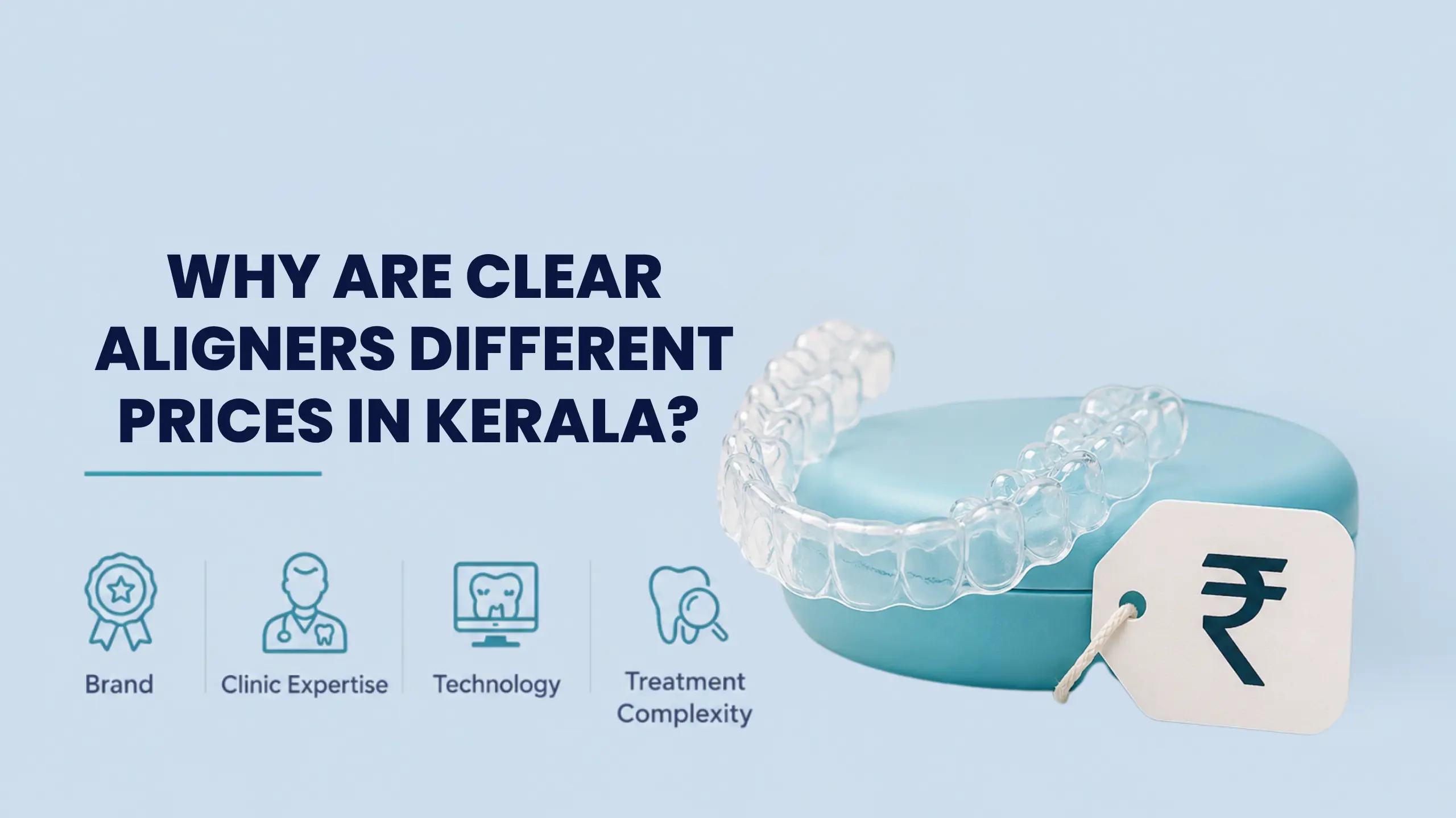
The material used in manufacturing aligners affects everything from how comfortable they feel to how efficiently they move teeth. It’s also one of the biggest reasons behind the difference in aligner costs across brands like Invisalign, ClearCorrect, and Clearbee.
Let’s take a closer look at the science behind aligner materials and how they influence both treatment quality and pricing.
Table Of Content
1. PETG (Polyethylene Terephthalate Glycol)
PETG is one of the earliest materials used in clear aligner manufacturing. It’s a transparent, medical grade thermoplastic polyester known for its rigidity and clarity.
Technical Description of PETG:
- Composition: Modified form of polyethylene terephthalate with added glycol to improve clarity and toughness.
- Mechanical Properties: Rigid, impact resistant, with moderate elasticity.
- Forming Process: Easily thermoformed over dental models, making it ideal for lab based aligner fabrication.
Advantages:
- Excellent transparency and polishability
- Cost effective and easy to manufacture
- Provides firm grip for mild alignment corrections
Limitations:
- Limited elasticity can feel tight initially
- Force retention may decrease over time.
Technology Level: Basic, single layer polymer
2. TPU (Thermoplastic Polyurethane)
TPU is a flexible, durable, and biocompatible polymer that offers a balance between strength and comfort. It’s now one of the most common materials used in commercial aligner systems due to its resilience and elasticity.
Technical Description of TPU:
- Composition: A block co-polymer made from alternating hard and soft segments, offering elasticity and wear resistance.
- Mechanical Properties: High tensile strength, flexibility, and resistance to cracking.
- Performance: Retains shape even after multiple insertions/removals and maintains consistent pressure for tooth movement.
Advantages:
- Excellent flexibility and comfort
- Resistant to stress cracks and discoloration
- Provides smoother, more uniform force distribution
Limitations:
- Slight yellowing may occur over time without proper cleaning
- May lose stiffness faster in hot environments
Technology Level: Single layer elastic polymer, ideal for continuous wear
3. Multi Layer Polymer
Multi layer polymers represent a leap in aligner technology. Premium aligner brands use advanced multi layer co-polyesters that ensure consistent pressure, enhanced flexibility, and a precision fit that lasts from the first tray to the last.
Technical Description:
- Composition: Consists of multiple layers with an elastic inner core for flexibility and rigid outer layers for strength and stability.
- Mechanical Properties: High elasticity modulus, controlled stiffness, and superior stress relaxation behaviour.
- Performance: Maintains consistent force throughout the wear period, enhancing predictability in tooth movement.
Advantages:
- Delivers constant, gentle pressure
- Excellent adaptability to tooth morphology
- Improved control for complex movements
- Minimizes cracking and deformation.
Limitations:
- Higher manufacturing cost due to multi layer construction
Technology Level: Advanced multi layer thermoform polymer
4. Memory Shaped Polymers (Shape Memory Materials)
Memory shaped polymers are an innovation in aligner engineering. These materials have the unique ability to remember a pre programmed shape and gradually return to it over time or under thermal activation, applying continuous, adaptive forces on teeth.
Technical Description:
- Composition: Shape memory polyurethane or co-polyester materials that can be thermo programmed during production.
- Mechanical Properties: Exhibit reversible deformation; recover their original shape at body temperature.
- Performance: Each aligner can perform multiple movement stages, reducing the total number of aligners required per treatment.
Advantages:
- Continuous and self adjusting pressure for extended wear
- Fewer aligner sets required (reduces treatment steps)
- Enhanced patient comfort and movement precision
Limitations:
- Higher production and material cost
- Must be precisely molded to fit and perform correctly
Technology Level: Smart polymer / thermoresponsive material
5. Bio based and Eco friendly Polymers
With a growing focus on sustainability, new generations of aligners use bio based or eco friendly thermoplastics derived partly from renewable resources. These materials maintain the same clinical performance while minimizing environmental impact.
Technical Description:
- Composition: Made from plant based, eco friendly plastics (such as corn starch, sugarcane, or other renewable materials).
- Mechanical Properties: Strong and flexible like traditional aligner plastics, and completely safe for the mouth.
- Performance: Comfortable to wear, clear and flexible, and safe for long term use.
Advantages:
- Environmentally responsible and BPA free
- Excellent transparency and comfort
Limitations:
- Not yet widely used in large scale production
- Slightly higher cost due to sustainable sourcing
Technology Level: Sustainable single/multi layer polymer
Summary Insight
Each aligner material represents a unique balance of technology, comfort, and cost. From PETG to advanced multi layer TPU and memory shaped polymers, the composition of an aligner determines how efficiently it moves teeth, how comfortably it fits, and how long each tray lasts.
Premium materials cost more to produce because they’re engineered for consistent force delivery, higher elasticity, and better wear resistance. In comparison, single layer PETG aligners are more affordable but may require more frequent replacements or refinements during treatment.
In short, the more advanced the material, the better it works, the more predictable the results, and the higher the cost. Choosing the right aligner material is therefore not just a financial decision but a clinical one, balancing comfort, speed, and precision.
Ready to Find the Right Aligner for You?
Every smile is unique, and so is every aligner. Knowing the type of material used helps you choose the right one for your needs, whether you want an affordable option or a more advanced, long lasting solution.
- Explore verified clinics across Kerala
- Compare aligner brands like Invisalign, ClearCorrect, and Clearbee
- Find the best fit for your smile and budget
References
Information gathered from the following trusted sources.